The latest edition of the FinTech Ecosystem Newsletter is here:
Image Credits: shutterstock.com
The latest edition of the FinTech Ecosystem Newsletter is here:
Image Credits: shutterstock.com

The latest edition of the FinTech Ecosystem Newsletter is here:
Image Credit: shutterstock.com

The latest edition of the FinTech Ecosystem Newsletter is here:
Image Credits: shutterstock.com

The latest edition of the FinTech Ecosystem Newsletter is here:
Image Credits: shutterstock.com

The latest edition of the FinTech Ecosystem Newsletter is here:
Image Credits: shutterstock.com
The latest edition of the FinTech Ecosystem Newsletter is here:
Image Credits: shutterstock.com
Join our community of 50,000+ subscribers and stay informed on the latest trends and news in the FinTech & AI world with the weekly newsletter provided by Bussmann Advisory. Gain insights into disruptive technologies, industry updates, and success stories from our portfolio companies.
This week’s must-know stories:
While the rise of generative AI, like ChatGPT, has sparked concerns over job displacement, new roles are emerging that focus on reviewing AI outputs. Prolific, a UK-based company, compensates individuals for reviewing AI-generated content. The company collaborates with major entities like Meta, Google, and academic institutions. These human reviewers provide essential feedback on AI outputs, ensuring accuracy and preventing harmful content generation. The CEO of Prolific, Phelim Bradley, emphasizes the importance of “AI workers” in shaping AI models and ensuring ethical AI development. Source
Amundi, one of Europe’s largest asset managers with over $2 trillion in assets, is exploring the tokenization of money market funds in Italy. Gabriele Tavazzani, CEO of Amundi Italy, envisions creating the first tokenized fund under Italian law, which would be open, digitally native, and fungible. This move aligns with Italy’s growing interest in tokenization, with other firms like Azimut and MedioBanca also venturing into this space. Source
JP Morgan’s Onyx division has launched its TCN, with BlackRock and Barclays initiating transactions on the platform. The inaugural transaction involved BlackRock tokenizing shares in its Money Market Fund and using them as collateral with Barclays for a derivatives contract. Tokenization can expedite the transfer of asset ownership, offering instant settlements. This initiative aims to reduce operational friction in meeting margin calls, especially during market pressures. Source
Plus, 9 more exclusive stories to help you stay ahead of the curve!
Subscribe now to empower your FinTech journey with the essential insights and connections you need to succeed. Don’t miss out – join our vibrant community today!
More information on www.bussmannadvisory.com. The latest edition of the FinTech Ecosystem Newsletter is here:

Unlock the Future of Finance: Empower Your Team with Cutting-Edge FinTech & AI Insights!
Don’t miss out on the chance to empower your team with crucial knowledge about disruptive technologies, FinTech, AI and Digital Assets! As trusted advisors to CEOs, CxOs, and Boards, we help you to tackle scale-up challenges and seize digital opportunities.
We offer expert advisory services for executive teams and customized in-person or virtual courses on relevant topics. Elevate your organization’s understanding of the future of finance – contact us at info@bussmannadvisory.com for more details and let’s transform your business together.

Join our community of 50,000+ subscribers and stay informed on the latest trends and news in the FinTech & AI world with the weekly newsletter provided by Bussmann Advisory. Gain insights into disruptive technologies, industry updates, and success stories from our portfolio companies.
This week’s must-know stories:
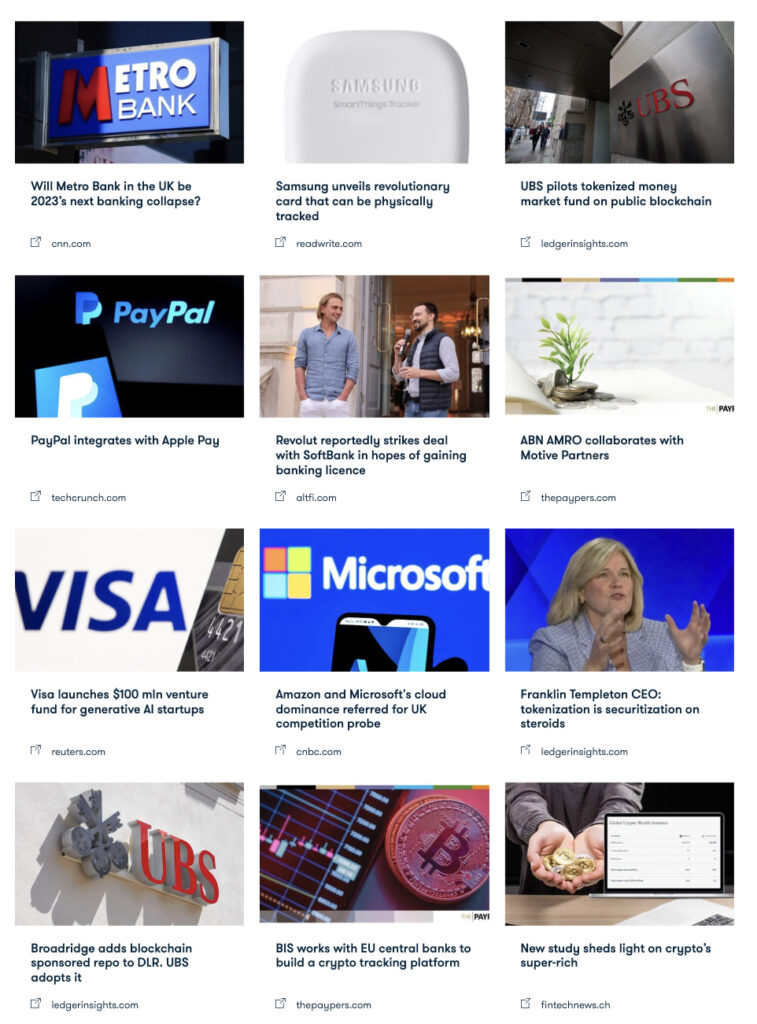
UK’s Metro Bank shares plummeted by 31% following reports of its urgent need to raise funds to stabilize its finances. The bank is in discussions to raise £250 million in equity and £350 million in debt. Since its establishment in 2010 as a challenger to major UK banks, Metro Bank’s shares have dropped nearly 66% since mid-September. This decline was exacerbated when UK regulators denied its request to modify capital requirements calculations for its residential mortgages. The bank’s challenges have been ongoing, with significant losses reported in recent years and fines imposed for understating the risk of certain loans. Source
Samsung has unveiled a unique credit card in South Korea that can be tracked using its SmartThings Find service. This integration offers users real-time card location via Bluetooth Low Energy technology, enhancing security and aiding in locating misplaced cards. Currently exclusive to South Korea, this card reflects the growing integration of IoT in everyday payment tools. Source
UBS Asset Management has piloted a tokenized money market fund on the Ethereum public blockchain as part of the Monetary Authority of Singapore’s Project Guardian. Tokenizing funds can enhance liquidity and market access. UBS executed fund subscriptions and redemptions using smart contracts and aims to expand its tokenization efforts with more partners. Source
Plus, 9 more exclusive stories to help you stay ahead of the curve!
Subscribe now to empower your FinTech journey with the essential insights and connections you need to succeed. Don’t miss out – join our vibrant community today!
More information on www.bussmannadvisory.com. The latest edition of the FinTech Ecosystem Newsletter is here:
Unlock the Future of Finance: Empower Your Team with Cutting-Edge FinTech & AI Insights!
Don’t miss out on the chance to empower your team with crucial knowledge about disruptive technologies, FinTech, AI and Digital Assets! As trusted advisors to CEOs, CxOs, and Boards, we help you to tackle scale-up challenges and seize digital opportunities.
We offer expert advisory services for executive teams and customized in-person or virtual courses on relevant topics. Elevate your organization’s understanding of the future of finance – contact us at info@bussmannadvisory.com for more details and let’s transform your business together.
Please note that this newsletter reflects Bussmann Advisory’s and Oliver Bussmann’s personal views and not those of any organization we are involved with. This newsletter is for educational purposes only and none of its content should be construed as investment or financial advice of any kind.

Join our community of 50,000+ subscribers and stay informed on the latest trends and news in the FinTech & AI world with the weekly newsletter provided by Bussmann Advisory. Gain insights into disruptive technologies, industry updates, and success stories from our portfolio companies.
This week’s must-know stories:
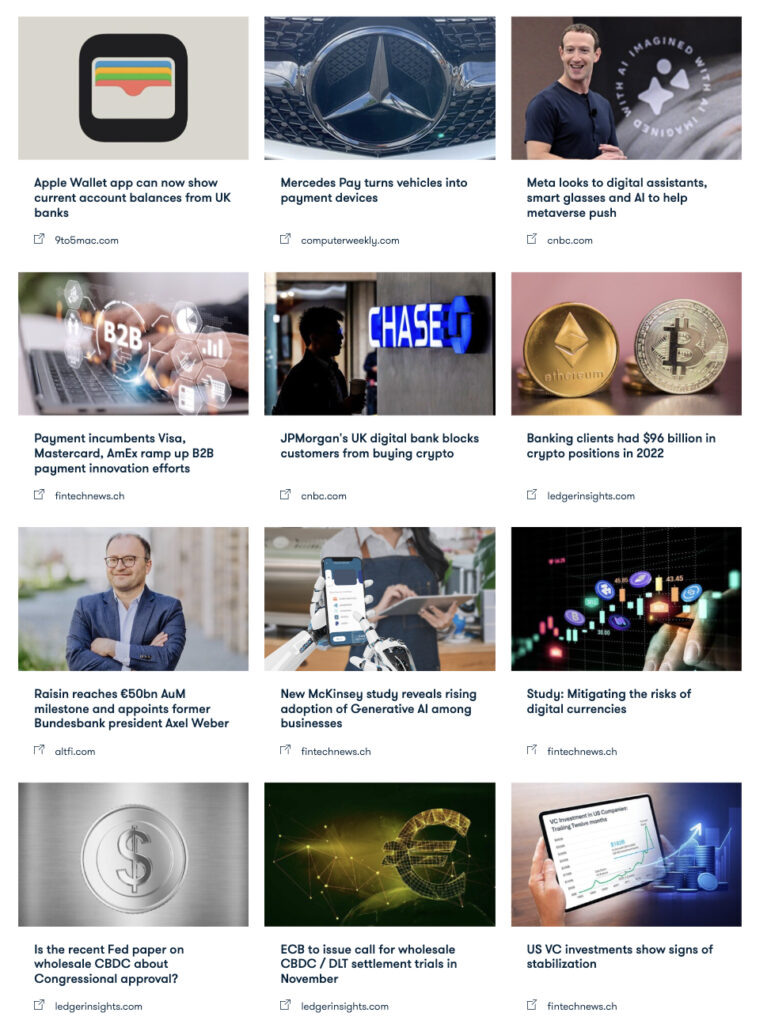
Apple is introducing a new feature in its iPhone Wallet app, leveraging the UK’s Open Banking API. This will allow users to view their current bank account balances, along with a history of deposits and payments, directly within the app. The feature aims to enhance financial awareness, especially when making purchases using Apple Pay. Initially, this integration will be available to a select group of Wallet app users in the UK, with banks like Barclays, HSBC, Lloyds, RBS, Monzo, and Starling supporting the rollout. Apple emphasizes its commitment to user privacy, ensuring that all data accessed from the API remains on the user’s device and is not stored on Apple’s servers.
German car manufacturer Mercedes is innovating in the FinTech space by integrating a contactless payment feature into its vehicles. This will enable drivers to seamlessly find, book, and automatically pay for parking spaces upon arrival.
Mark Zuckerberg, CEO of Meta, is focusing on digital assistants, smart glasses, and AI to drive the company’s vision for the metaverse. At a recent conference, Zuckerberg unveiled new AI tools and the Quest 3 virtual reality headset. He also introduced AI-powered editing tools for Instagram and a new AI digital assistant that can generate sophisticated responses. This assistant can even access Microsoft’s Bing search engine for real-time information. Meta’s overarching goal is to immerse users in its envisioned metaverse, with AI playing a pivotal role in shaping this digital universe.
Plus, 9 more exclusive stories to help you stay ahead of the curve!
Subscribe now to empower your FinTech journey with the essential insights and connections you need to succeed. Don’t miss out – join our vibrant community today!
More information on www.bussmannadvisory.com. The latest edition of the FinTech Ecosystem Newsletter is here:
Unlock the Future of Finance: Empower Your Team with Cutting-Edge FinTech & AI Insights!
Don’t miss out on the chance to empower your team with crucial knowledge about disruptive technologies, FinTech, AI and Digital Assets! As trusted advisors to CEOs, CxOs, and Boards, we help you to tackle scale-up challenges and seize digital opportunities.
We offer expert advisory services for executive teams and customized in-person or virtual courses on relevant topics. Elevate your organization’s understanding of the future of finance – contact us at info@bussmannadvisory.com for more details and let’s transform your business together.
Please note that this newsletter reflects Bussmann Advisory’s and Oliver Bussmann’s personal views and not those of any organization we are involved with. This newsletter is for educational purposes only and none of its content should be construed as investment or financial advice of any kind.

Join our community of 50,000+ subscribers and stay informed on the latest trends and news in the FinTech & AI world with the weekly newsletter provided by Bussmann Advisory. Gain insights into disruptive technologies, industry updates, and success stories from our portfolio companies.
This week’s must-know stories:
Plus, 9 more exclusive stories to help you stay ahead of the curve!
Subscribe now to empower your FinTech journey with the essential insights and connections you need to succeed. Don’t miss out – join our vibrant community today!
More information on www.bussmannadvisory.com. The latest edition of the FinTech Ecosystem Newsletter is here:
Unlock the Future of Finance: Empower Your Team with Cutting-Edge FinTech & AI Insights!
Don’t miss out on the chance to empower your team with crucial knowledge about disruptive technologies, FinTech, AI and Digital Assets! As trusted advisors to CEOs, CxOs, and Boards, we help you to tackle scale-up challenges and seize digital opportunities.
We offer expert advisory services for executive teams and customized in-person or virtual courses on relevant topics. Elevate your organization’s understanding of the future of finance – contact us at info@bussmannadvisory.com for more details and let’s transform your business together.
Please note that this newsletter reflects Bussmann Advisory’s and Oliver Bussmann’s personal views and not those of any organization we are involved with. This newsletter is for educational purposes only and none of its content should be construed as investment or financial advice of any kind.